Optimal Cold Email Word Count: 2024 Data & Benchmarks
Lavender's 2024 data on millions of B2B emails shows the optimal word count is 25-75 words. Learn why shorter emails get more replies.

The optimal word count for a cold email in 2024 is between 25 and 75 words. According to data from Lavender and Hunter analyzing millions of sales emails, messages within this range see the highest reply rates. [2, 18] Specifically, Hunter's analysis of 34 million emails found the 20-39 word range had the highest average reply rate, while other studies from Overloop and Boomerang point to a 50-125 word range as the sweet spot. [2, 3, 6] This data-driven approach emphasizes brevity to respect executive attention spans and optimize for mobile reading.
TL;DR
- Lavender's 2024 data analysis recommends an optimal cold email length of 25 to 50 words for initial outreach. [18]
- Hunter's analysis of 34 million cold emails found the 20-39 word range achieved the highest average reply rates. [2]
- Data from Overloop, Boomerang, and others shows a 50-125 word count delivers reply rates up to 8.2%, significantly higher than emails over 200 words (3.9%). [3, 6]
- The average business professional receives 121-126 emails per day, making brevity essential to capture attention. [7, 17]
- Emails written at a 3rd-to-5th grade reading level see a 36% higher response rate than those written at a college level. [3, 8]
The Data-Backed Consensus: 50-125 Words is the Optimal Range
A foundational analysis by Boomerang, which examined 40 million emails, established the widely cited benchmark that messages between 50 and 125 words achieve the best response rates. [28, 31] This study, though conducted in 2016, remains a critical reference point, revealing that reply rates peaked at 51% for emails containing 75-100 words and remained above 50% within the broader 50-125 word range. [3, 28] The research methodology involved analyzing a massive dataset from their user base, correlating word count directly with the likelihood of receiving a response. [28] While some newer analyses suggest even greater brevity, the principles from Boomerang's work underscore a core truth: prospects respond to emails that are substantial enough to convey value but concise enough to respect their time. Writing at a simpler, third-grade reading level was also found to boost response rates by 36% over messages written at a college level, a testament to the power of clarity and directness in any professional communication. [3, 31] The durability of these findings highlights that while tools and platforms evolve, the psychology of capturing attention in a crowded inbox remains remarkably consistent, favoring clear, direct, and reasonably brief communication over lengthy, complex pitches.
More recent data from multiple sales engagement platforms reinforces this optimal range, adding contemporary context to the established benchmarks. A 2026 analysis by Overloop, based on 1.2 million of its users' email sequences, confirms that the 50-125 word band is a modern sweet spot, achieving an 8.2% reply rate. [2] This stands in stark contrast to the significantly lower 3.9% reply rate for emails exceeding 200 words, demonstrating a clear penalty for long-winded outreach in the current environment. [2] Similarly, data from Mailforge, a platform specializing in cold outreach infrastructure, indicates that emails within the 50-125 word count see reply rates approximately 50% higher than longer formats. [8, 12] Further analysis from Woodpecker.co, another sales automation platform, supports this consensus, identifying the 75-125 word range as ideal for initial outreach emails that need to establish context and present a value proposition effectively. [7] These platforms, which process millions of interactions, provide a real-world laboratory for what works now, confirming that brevity is not just a preference but a statistical driver of success. Their findings from 2024 through 2026 consistently show that concise, value-driven messages are essential for cutting through the noise of today's saturated inboxes.
While a strong consensus points to the 50-125 word range, compelling data also exists for an even shorter, hyper-concise approach, suggesting the optimal length may depend on strategic context. An April 2024 analysis of 34 million cold emails by Hunter.io found that the absolute highest average reply rate occurred in the 20-39 word bracket. [1] However, the same study noted that all emails under 100 words generally performed better than longer ones, aligning with the broader trend toward brevity. [1] This suggests a strategic choice for sales professionals: a 25-50 word email may be perfect for a quick interest check or a follow-up, while a 50-100 word message provides the necessary space to introduce a new concept or provide critical context for a cold lead. For example, Salesloft, a prominent sales engagement platform, advises its users to keep emails under 50 words to boost response rates, emphasizing that the entire message should be visible on a mobile screen without scrolling. [5] This nuance is also reflected in data from Gong.io, which found that while initial cold emails should be under 100 words, follow-up emails with more substance (4+ sentences) can be more effective because they need to re-establish context for the recipient. [19, 22] Ultimately, the data indicates a spectrum of effective brevity, from the hyper-short 25-word email to the more standard 75-word message.
| Data Provider | Dataset Size | Optimal Word Count | Key Finding / Reply Rate | Year of Analysis |
|---|---|---|---|---|
| Overloop | 1.2 Million Sequences | 50-125 words | 8.2% reply rate in this range, versus 3.9% for emails over 200 words. | 2026 |
| Boomerang | 40 Million Emails | 50-125 words | Emails in the 75-100 word range received the highest response rate (51%). | 2016 |
| Hunter.io | 34 Million Emails | 20-39 words | The 20-39 word range had the highest average reply rate; emails under 100 words performed better overall. | 2024 |
| Mailforge | Not Specified | 50-125 words | Achieved reply rates ~50% higher than longer formats. | 2026 |
| Woodpecker.co | 20 Million+ Emails | 75-125 words | Identified as the best range for initial outreach to establish value and context. | 2026 |
| Salesloft | 12 Million Emails (2H 2020) | <50 words | Keeping emails under 50 words can boost response rates significantly. | 2020-2026 |
| Gong.io | 28 Million+ Emails | <100 words | Emails with 3-4 sentences and under 100 words see the highest reply rates for initial outreach. | 2025 |
Why Brevity Wins: Cognitive Load and the Mobile-First Mandate
The intense competition for a prospect's attention begins with acknowledging the sheer volume of digital correspondence they face daily. An office worker receives approximately 121 emails every day, according to the Radicati Group's Email Statistics Report, 2024-2028. This constant stream of information creates a significant cognitive load, forcing recipients to become ruthless curators of their inboxes. Every message is implicitly judged on the effort required to open, read, and process it. A long, dense email demands more cognitive energy, increasing the likelihood it will be deferred, archived, or deleted without being read. In contrast, a concise email of 25 to 75 words presents a low barrier to engagement. It can be understood at a glance, signaling that the sender has done the work of distilling their message to its essential core. This respect for the recipient's limited cognitive resources is a critical first step in building rapport and earning a response. The psychological principle at play is clear: in an environment saturated with information, brevity is not just a preference but a functional necessity for communication to even begin.
The mandate for brevity is further amplified by the dominance of mobile devices in email consumption. In 2024, well over half of all emails are first opened on a mobile device, with some analyses placing the figure at over 60%. This fundamental shift in reader context from large desktop monitors to small smartphone screens makes conciseness a prerequisite for readability. A 300-word email that might appear manageable on a 27-inch display becomes an intimidating wall of text on a 6-inch screen, requiring extensive scrolling that often leads to abandonment. Long paragraphs are particularly problematic, as they obscure the key message and frustrate a reader trying to quickly assess the email's purpose. A message that stays within the 25 to 75-word range can often be viewed in its entirety without any scrolling, allowing the recipient to absorb the full context instantly. This mobile-first reality means that even the most compelling value proposition will fail if it is buried in a format that is hostile to the primary reading environment of the modern executive.
Concise emails directly address the reality of diminished human attention spans, a trend accelerated by digital media consumption. While the widely cited statistic of an 8-second attention span, originating from a 2015 Microsoft study, is often debated, the underlying principle remains undisputed: the window to capture a prospect's interest is incredibly small. Research from University of California, Irvine, professor Gloria Mark, detailed in her work on attention, shows that people switch between screens every 47 seconds on average, highlighting a state of constant distraction. A cold email must therefore deliver its core message almost immediately. Beyond simply being practical, this brevity signals a profound respect for the prospect's time, a psychological gesture that builds credibility. By presenting a clear, direct, and succinct request, the sender demonstrates that they are organized, value efficiency, and are considerate of the recipient's packed schedule. This act of consideration can foster goodwill and psychologically prime the recipient to be more receptive to the message, making a reply feel less like an obligation and more like a reasonable next step in a professional interaction.
Word Count vs. Reply Rate: A Comparative Analysis
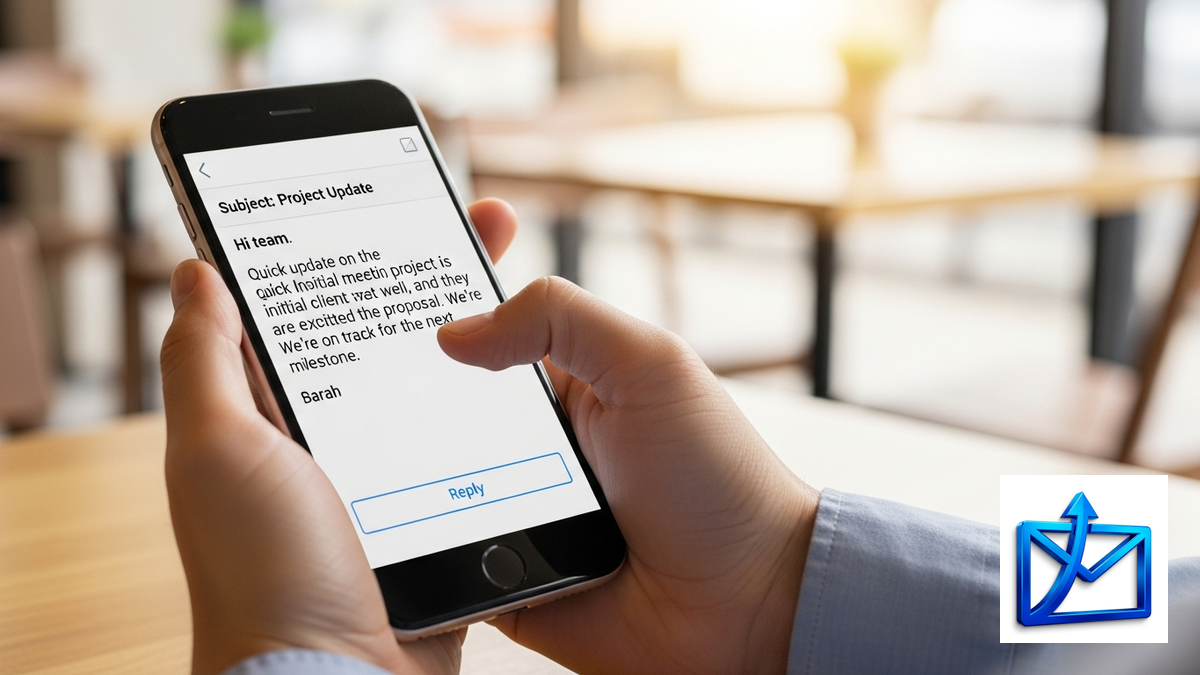
A comparative analysis of word count and reply rates reveals a clear, data-driven consensus: brevity consistently outperforms verbosity. The most aggressive recommendation for conciseness comes from a Hunter.io analysis of 34 million cold emails, which found that messages in the 20-39 word range achieved the highest average reply rate. [3] This ultra-short format forces senders to distill their message to its absolute essence, a practice that respects the severely limited attention span of busy executives and optimizes for mobile-first consumption, where long blocks of text are particularly discouraging. Similarly, data from Lavender, a sales email intelligence platform, identifies an optimal range of 25 to 50 words for initial outreach. [13, 20] These findings challenge the traditional sales approach of providing extensive context upfront. Instead, they champion a model where the primary goal is to pique curiosity and earn a response with a message that can be absorbed in seconds. This methodology, rooted in the analysis of millions of real-world interactions, suggests that the initial email's job is not to sell, but to start a conversation, and the quickest way to do that is to be ruthlessly brief and direct.
While ultra-short emails show strong performance, a slightly broader range of 50 to 125 words is widely cited as the high-performance sweet spot, balancing brevity with sufficient context. A landmark, if now dated, 2016 study from Boomerang analyzing 40 million emails was among the first to popularize this range, finding that emails between 75 and 100 words hit a peak reply rate of 51%. [6] More recent data reinforces this band; a 2026 analysis from Overloop covering over 4 million emails confirms the 50-125 word bracket delivers an 8.2% reply rate, significantly higher than other lengths. [1] This word count allows for a structured yet concise message: a personalized opening, a one-sentence problem hypothesis, and a clear, singular call-to-action. According to the Overloop 2026 Cold Email Benchmarks, this length is optimal because it fits comfortably on a smartphone screen without requiring scrolling and provides enough information to establish relevance and value, compelling a response without overwhelming the recipient. This contrasts with sub-50-word emails, which can sometimes feel templated or lack the necessary context to be persuasive. [1]
The penalty for exceeding the optimal word count is severe and quantifiable, with reply rates dropping precipitously as emails become longer. Data from Overloop's 2026 analysis shows that as email length increases from the 50-125 word sweet spot, reply rates fall; emails with 200-300 words see their reply rate plummet to just 3.9%. [1] This represents more than a 50% decrease in effectiveness compared to the 8.2% reply rate for optimally concise messages. This decline is exacerbated by a broader, industry-wide trend of decreasing engagement. According to data from multiple platforms including a cold-email platform and Infraforge, the average platform-wide cold email reply rate has fallen from a range of 5.1% to 5.8% in 2024 to a stark 3.43% in 2026. [4, 7, 22] This decline, detailed in reports like the Woodpecker State of Cold Email 2026, is attributed to increased inbox saturation and more aggressive spam filtering by providers like Google and Outlook. In this unforgiving environment, a long, self-indulgent email is not just an annoyance; it is a critical strategic error that signals a disregard for the recipient's time and significantly increases the probability of being ignored or marked as spam.
| Source/Vendor | Year of Study | Optimal Word Count | Key Finding / Reply Rate | Sample Size |
|---|---|---|---|---|
| Hunter.io | 2024 | 20-39 words | This range had the highest average reply rate. | 34 million emails |
| Lavender.ai | 2023 | 25-50 words | Optimal range for initial cold outreach to maximize replies. | Billions of emails |
| Boomerang | 2016 | 50-125 words | Emails in this range achieved reply rates above 50%. | 40 million emails |
| Overloop | 2026 | 50-125 words | Achieved an 8.2% reply rate, the highest of any bracket. | 4 million+ emails |
| Overloop (Long Emails) | 2026 | 200-300 words | Reply rate drops significantly to 3.9%. | 4 million+ emails |
| a cold-email platform Benchmark Report | 2026 | N/A | Platform-wide average reply rate declined to 3.43%. | Billions of emails |
Beyond Length: Readability and Formatting Drive Engagement
Emails written at a lower reading level consistently outperform those with complex language, directly impacting response rates. Data from a Boomerang study analyzing 40 million emails reveals a clear trend: messages written at a 3rd-grade reading level receive 36% more responses than those written at a college level. The same study showed that even an 8th-grade reading level yields a 17% higher response rate compared to the collegiate baseline. This does not mean simplifying the core concepts, but rather prioritizing clarity and reducing cognitive load for the recipient. The goal is to write for an expert audience in a way a non-expert can still understand. This principle is about respecting the executive's limited time; simpler language is faster to process. For example, a separate analysis found that cold emails written at a 6th or 7th-grade level achieve a 3.5% reply rate, which is more than double the 1.6% rate for emails at an 11th-grade level. Senders can use tools that measure readability via the Flesch-Kincaid scale to aim for a score above 60, which corresponds to an 8th-grade level or lower, ensuring the message is accessible and scannable. This data-driven approach to language simplicity is a cornerstone of effective cold outreach, proving that how you say something is just as important as what you say.
Strategic formatting, specifically the use of short paragraphs and bullet points, is critical for improving readability and driving engagement, especially on mobile devices. With over 55% of all emails now opened on mobile, content must be optimized for smaller screens and scanning behavior. Research from Worldmetrics' 2026 report shows that 59% of mobile emails already use short paragraphs of three to four lines maximum for better readability. Long blocks of text are a major obstacle to comprehension, as users rarely read every word; studies show people typically read only about 20% of a webpage's content. Bulleted lists serve as powerful visual anchors, breaking up text and allowing readers to quickly digest key information. This structure enhances scannability, highlights important details, and can lead to improved reader engagement. The ideal bullet point is concise, limited to one or two lines, and focuses on a single idea. By structuring an email with two-to-three sentence paragraphs and using bullet points to detail benefits or key features, senders cater to modern reading habits, ensuring the core message is understood even with a quick glance. This formatting discipline respects the reader's time and significantly increases the likelihood that they will not only read but also respond to the message.
The subject line is the gatekeeper to your email, and its length is a primary factor in whether it gets opened. Data consistently shows that brevity is key, with the optimal length falling between 36 and 50 characters, which roughly translates to 4-7 words. An analysis by Belkins of 5.5 million cold emails sent in 2024 found that subject lines with 2-4 words achieved the highest open rate at 46%. Performance steadily declined as word count increased, dropping to 34% for subject lines of 10 words. This aligns with mobile viewing constraints; with 64% of emails opened on phones, subject lines are often truncated after 35-40 characters. Therefore, front-loading the most critical information is essential. While some B2B contexts may benefit from slightly longer, more descriptive subject lines to provide necessary context, the general rule for cold outreach remains concise and specific. For instance, research from Martal Group's 2025 study noted that the 36-50 character range produced the best response rates for cold emails, suggesting this length provides just enough information to earn curiosity without overwhelming the recipient. Ultimately, the goal is to be specific and compelling within a very limited space, respecting that the subject line's first job is to stand out in a crowded inbox and earn the open.
A single, unambiguous call-to-action (CTA) dramatically outperforms multiple requests by eliminating decision paralysis and focusing the prospect on a clear next step. Overwhelming data supports this principle of simplicity; one analysis found that emails with a single CTA generate 371% more clicks than those with multiple CTAs. This disciplined approach helps keep the email's overall word count within the optimal 25-75 word range and provides a clear, logical conclusion to the message. The most effective CTAs are often framed as low-friction, interest-based questions rather than high-commitment requests. An analysis of over 200,000 cold emails revealed that soft CTAs, such as open-ended questions, achieve an average reply rate of 4.2%, which is three times higher than the 1.4% reply rate for hard CTAs that ask for a meeting or demo. Placing this solitary CTA prominently, often just before the sign-off, ensures it is easily seen without being buried in text. For mobile optimization, using a button-style CTA over a simple text link can improve click-through rates significantly, as they are more noticeable and easier to tap. By focusing on one clear, simple, and compelling action, senders reduce cognitive friction and make it easy for the prospect to say yes.
How Top B2B Agencies Structure Winning Cold Emails
Top-performing B2B agencies build winning cold emails around a foundation of strategic brevity and a clear, singular focus. The B2B lead generation agency Belkins, for instance, reported in its 2023 analysis of 11 million emails that while messages in the 200-250 word range saw a 19% reply rate, very short emails under 50 words were the second-best performers with a 17% reply rate. This aligns with broader industry findings that emphasize conciseness; a 2026 analysis from Backlinko and Boomerang identified the optimal length as 50-125 words. The underlying principle is that a shorter email respects the recipient's time and is optimized for mobile consumption, where long blocks of text can be overwhelming. This structure is not just about cutting words, but about focusing the message. A/B testing conducted by sales teams consistently demonstrates that shorter emails with a single, clear call to action (CTA) outperform longer messages that present multiple asks. According to a 2025 analysis by Tarvent, emails with a single CTA can see up to 371% more clicks than those with competing CTAs, as a singular focus eliminates decision fatigue for the prospect. This forces the sender to distill their value proposition into its most potent form, making the desired next step obvious and frictionless.
Advanced personalization is the engine that drives reply rates, lifting them far beyond the single-digit averages that plague generic campaigns. Data from a 2026 Woodpecker analysis of over 20 million emails shows that campaigns with advanced personalization achieve reply rates of up to 18%, which is double the approximately 9% rate for non-personalized templates. This level of customization goes far beyond simply inserting a {{first_name}} or {{company_name}} merge tag. It involves referencing specific, timely trigger events, such as a prospect's recent article, a new company initiative mentioned in a press release, or a hiring surge for a particular department. According to Salesforce's 2025 guide on cold outreach, referencing mutual connections, recent achievements, or relevant blog posts establishes a baseline of trust and creates an emotional connection that generic templates cannot replicate. High-performing sales development representatives (SDRs) operationalize this by building a research-to-send workflow, as detailed by Unify's 2026 best practices guide, which ensures every email is anchored to a real, recent event before any copy is written. This research-driven approach transforms the email from an interruption into a timely, relevant conversation, justifying its arrival in the prospect's inbox and giving them a compelling reason to engage.
The most effective cold emails adhere to a disciplined three-part structure: a personalized opening, a one-sentence value proposition, and an interest-based call to action. This framework, identified as a best practice by top-performing SDRs, provides a clear and repeatable model for crafting messages that convert. The personalized opening serves as the hook, immediately demonstrating that the email is not a mass blast by referencing a specific detail about the prospect or their company. Following this hook, the one-sentence value proposition clearly and concisely explains the benefit to the recipient, avoiding jargon and focusing on outcomes. The final component is a low-friction, interest-based CTA. Instead of asking for a specific meeting time, which can create scheduling friction, this type of CTA gauges interest with a simple question like, “Is this a priority for you right now?” or “Worth learning more about?” This approach consistently wins in A/B tests against high-friction asks. By combining a sharp, personalized hook with a succinct value statement and a simple, question-based CTA, this structure aligns perfectly with the optimal word count of 25-75 words, ensuring the message is potent, respectful of the recipient's time, and easy to act upon.
Related reading
- see our 2024 cold email benchmarks by industry analysis
- see our 2024 cold email reply rate benchmarks analysis
- see our cold email benchmarks reply rates word count analysis
- see our cold email personalization reply rate data analysis
Frequently Asked Questions
What is the best word count for a cold email in 2024?
The optimal word count for a cold email is between 50 and 125 words. [19] Data analysis from multiple platforms like Boomerang and Overloop shows this range consistently generates the highest reply rates, balancing sufficient context with respect for the reader's time. [1, 14] Specifically, emails in the 75-100 word range often hit a peak performance, as this length is substantial enough to convey value but short enough to be read in seconds. [10]
Does email length really affect reply rates?
Yes, email length directly and significantly affects reply rates. Data analysis of millions of emails shows that messages between 50 and 125 words can achieve a reply rate up to 2.4 times higher than emails over 200 words. [10] As word count increases beyond 150 words, reply rates drop sharply because busy professionals often delete or ignore messages that appear too long to read quickly. [1, 10] Conversely, emails under 50 words can also underperform because they may lack the necessary context to be compelling. [10]
How short is too short for a cold email?
Emails under 25-50 words are often too short for an initial cold outreach. [1, 17] While brevity is crucial, analysis from Hunter's study of 34 million emails found the highest reply rates in the 20-39 word range, suggesting a lower limit. [16] However, ultra-short emails below this often fail to provide enough context or value, making them feel spammy or lazy and giving the recipient no compelling reason to respond. [1, 10]
What is a good reply rate for cold emails?
A good reply rate for cold emails in 2024 is between 5% and 10%, with anything over 10% considered excellent for most industries. [9, 11] While platform-wide averages have trended down to around 3.43% due to inbox saturation, highly targeted and personalized campaigns can achieve 15% or even higher. [5, 9] Benchmarks show the top 25% of campaigns exceed a 20% reply rate, highlighting the gap between average and elite performance. [3]
Should my call-to-action be included in the word count?
Yes, your call-to-action (CTA) should absolutely be included in the total word count. The optimal length of 50-125 words applies to the entire body of the email, from the first word to the last. [19] An effective cold email structure includes an introduction, a value proposition, and a clear CTA within this concise format. [19] Emails with a single, clear call-to-action at the very end perform best, so accounting for its length is essential for staying within the target range. [1]
How does mobile viewing affect optimal email length?
Mobile viewing is a primary driver of shorter email lengths, as over half of all emails are first opened on a mobile device. [21] With an average mobile viewing time of just 10 seconds, an email's entire message must be scannable almost instantly. [23] An email between 50-125 words is typically visible on a smartphone screen without requiring the user to scroll, which is critical because 75% of users may delete emails that are not optimized for mobile. [4, 23]
Last updated: July 2026